Vol. 1
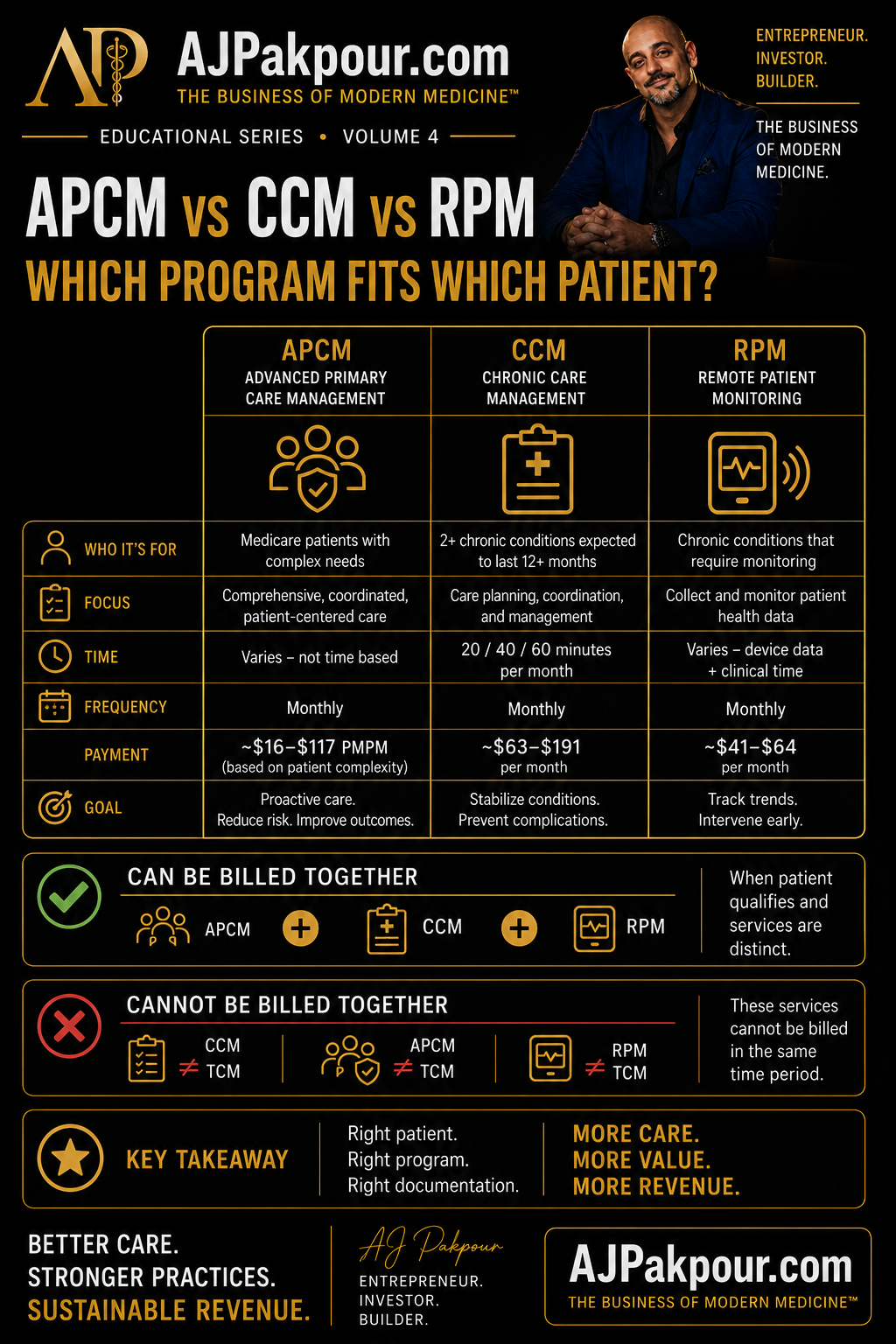
Side-by-side comparison of Advanced Primary Care Management, Chronic Care Management, and Remote Patient Monitoring — eligibility, billing, and how to choose the right program.
By AJ Pakpour — The Business of Modern Medicine™
Advanced Primary Care Management (APCM), Chronic Care Management (CCM), and Remote Patient Monitoring (RPM) are three of Medicare's most valuable care management programs — and they are frequently confused with one another.
Each program serves a distinct purpose, has different eligibility requirements, and reimburses for different types of care activities. Understanding the differences — and knowing which programs can be combined — is essential for practices looking to maximize their care management revenue.
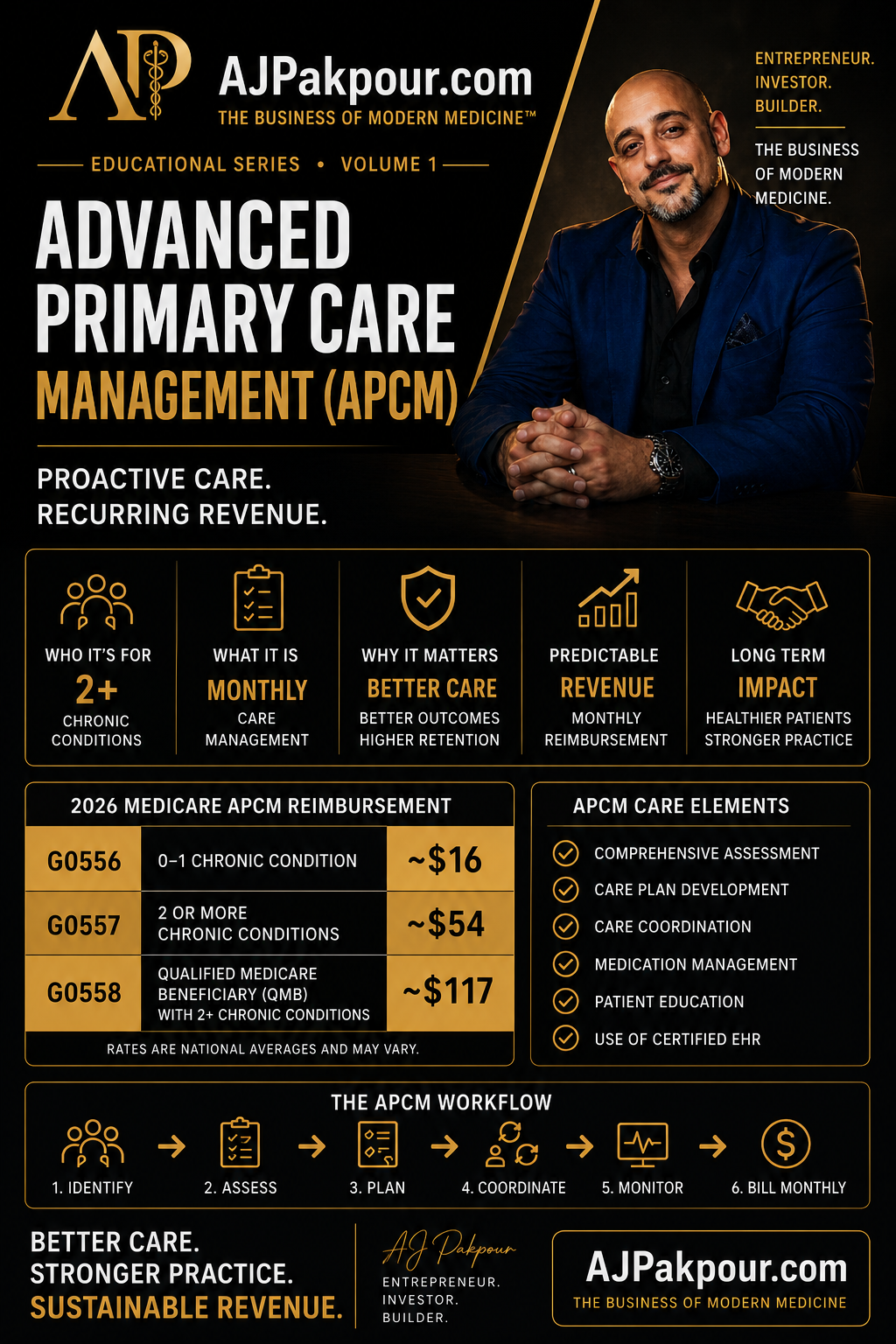
APCM is specifically designed for primary care practices and focuses on the ongoing management relationship between a primary care provider and their Medicare patients. CCM is broader in scope and available to any qualifying provider managing patients with chronic conditions. RPM adds a technology layer — continuous monitoring of patient vitals using connected devices.
The most successful practices don't choose between these programs — they implement a strategic combination based on their patient population, clinical capabilities, and operational capacity.
Book a one-on-one Healthcare Strategy Session with AJ Pakpour and get direct, actionable guidance for your specific practice.
The content on this page is for informational and educational purposes only. It does not constitute medical, legal, or financial advice. Medicare billing rules and program requirements are subject to change. Always consult current CMS guidance and qualified billing professionals for your specific situation.