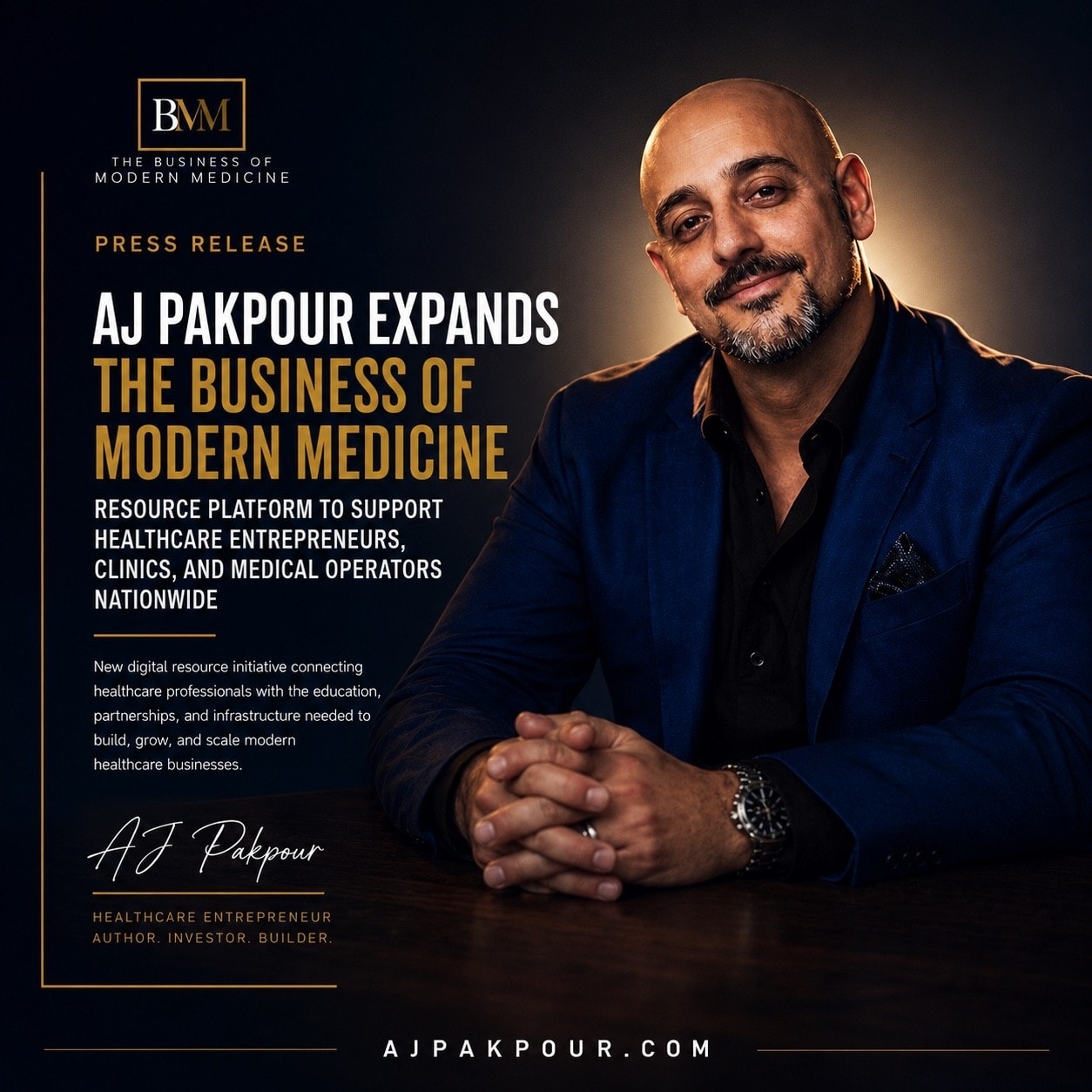
What the Feature Covers
In this November 2026 feature, AJ Pakpour argues that the most common and costly mistake healthcare entrepreneurs make is building the marketing machine before building the medical business underneath it. The pattern repeats across every high-growth healthcare category — GLP-1 weight loss, telehealth, IV therapy, hormone optimization, medical aesthetics, regenerative medicine, and remote patient monitoring.
Operators generate demand for services they are not yet legally or operationally prepared to deliver. They build the logo, the website, and the ad campaigns before anyone has answered who owns the medical entity, who provides clinical oversight, whether practitioners are properly licensed, how prescriptions are handled, where records are stored, or whether the structure complies with state law.
The feature draws on AJ's 25+ years working around healthcare businesses — as VP of Doctor Staffers, founder of AmeraCell, and consultant to clinic operators across all 50 states. His core argument: the next generation of successful healthcare entrepreneurs will treat regulatory and clinical infrastructure as part of the business model, not as paperwork handled after revenue arrives.
The piece also addresses multi-state expansion risk. A structure that works in Florida may not work in California, Massachusetts, Texas, or Georgia. Corporate-practice-of-medicine restrictions, professional entity rules, supervision requirements, and scope-of-practice laws can materially change how a clinic must operate — and the entrepreneur who understands those differences holds an advantage that better advertising cannot replicate.
AJ closes with a direct assessment: the healthcare gold rush is not ending — it is simply becoming harder for amateurs to survive it. Marketing still matters, but marketing cannot rescue a structurally weak healthcare company.
Why This Matters for Healthcare Founders
The argument in this feature is the same framework AJ applies when evaluating any medical business: revenue is rarely the first question. The first questions are who owns it, who controls the clinical decisions, whose licenses the operation depends upon, and what happens if one critical person or reimbursement rule disappears tomorrow.
Those answers — not last month's sales — reveal the future of the business. This is the foundation of AJ's consulting work through medical directorship services, collaborating physician agreements, and healthcare compliance consulting.
Read the Full Feature on The Entrepreneurs Weekly